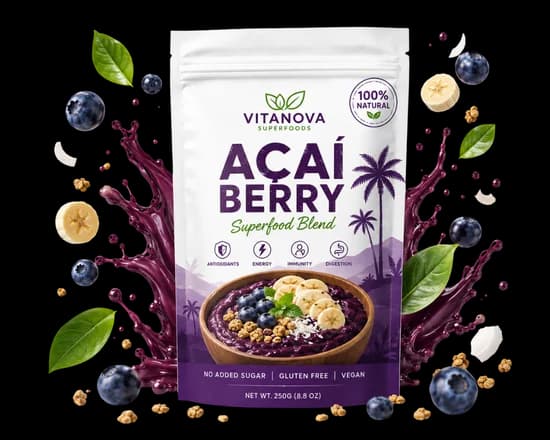
Switzerland stands for precision, quality, and luxury worldwide. Swiss brands in Zurich's financial and pharma hub, and Geneva's luxury and watchmaking industry, demand packaging design that matches their world-class product standards.
Key Industries Driving Packaging Demand in Switzerland
Switzerland's economy centres on precision, quality, and IP-protected origin claims: pharmaceuticals and life sciences from Basel-headquartered giants Roche and Novartis; luxury watchmaking from Geneva-based Rolex and Patek Philippe and the Richemont group (Bellevue), alongside Swatch Group in Biel/Bienne; premium food and confectionery led by Nestlé (headquartered in Vevey) and Lindt & Sprüngli (founded in Zurich in 1845); and precision instruments, machinery and financial services concentrated around Zurich. Packaging and brand design demand is heaviest in Zurich (finance, pharma, FMCG head offices), Geneva (luxury goods, watchmaking, international organisations) and Basel (pharmaceuticals and chemicals), with briefs consistently prioritising multilingual compliance, restrained premium aesthetics, and the provenance cues needed to support a 'Swiss made' claim.
Packaging Regulations in Switzerland
Swiss law closely mirrors EU rules but is set independently under bilateral agreements, so packaging can't simply reuse EU copy. Food packaging is governed by the Foodstuffs and Utility Articles Ordinance (LGV, SR 817.02) and the Food Information Ordinance (LIV), which since 2017 has required full nutritional declarations on pre-packaged foods; a 2025 amendment adds mandatory labelling for animal-derived foods produced using painful procedures without anaesthesia. Cosmetics packaging follows the Ordinance on Cosmetic Products (VKos, SR 817.023.31), whose ingredient-list and claims rules are aligned with EU Regulation 1223/2009. Pharmaceutical packaging is reviewed by Swissmedic, which requires product information in at least two of German, French and Italian (English permitted only for hospital-only packs), a minimum 7pt font size, and month/year expiry formatting. The 2017 'Swissness' legislation sets strict thresholds for any 'Swiss made' claim on packaging: at least 60% of manufacturing cost incurred in Switzerland for industrial goods (100% of technical development for watches), and 80% of raw-material weight sourced domestically for foodstuffs (100% for dairy and other agricultural products). In practice, most Swiss packaging carries German, French and Italian together, going beyond the LIV's two-language minimum to cover the whole domestic market.
What Print-Ready Files Look Like for Switzerland Distribution
All Awais Khadim deliverables for Switzerland clients include:
- Dielines and cut files: Every structural format, labels, cartons, pouches, mailer boxes, includes the dieline or cut path alongside the artwork file.
- CMYK-configured artwork: Set up for offset, flexographic, or digital print as appropriate to the project and print supplier.
- Pantone specifications: Brand colours specified in both the Pantone C/U variant (for ink specification) and CMYK (for digital proofing and suppliers without Pantone capability).
- Print-ready PDF: PDF/X-1a or PDF/X-4, with all fonts embedded and bleed and crop marks correctly set.
- CHF pricing: All projects quoted in CHF, with clear scope and revision round specifications included.
- Language-compliant source files: Text layers are editable in the source files and configured for Switzerland's mandatory label language requirements, copy updates, new regulatory statements, or bilingual text additions can be made without rebuilding the design.
View packaging portfolio → | Start a project →
Working with Awais Khadim for Switzerland Brands
Awais Khadim has delivered packaging, label design, and brand identity for brands across the Switzerland market and the wider region. What this means practically:
- Regulation-aware files: Label requirements, mandatory declarations, and compliance-specific typography are built into the source file at brief stage, not retrofitted at the end.
- Print-ready output: All deliverables include dielines, CMYK-configured artwork, Pantone colour specifications, and PDF/X-1a or PDF/X-4 print-ready exports.
- CHF pricing and transparent quotes: All projects are quoted in CHF with clear scope, revision rounds, and file format specifications included.
- Service categories: Product packaging (food, supplements, cosmetics, e-commerce), label and sticker design, box and pouch packaging, brand identity systems.
View packaging portfolio → | Start a project →
Frequently Asked Questions
Does Swiss packaging need to be in multiple languages?
Yes. Switzerland has four official languages, German, French, Italian, and Romansh, and consumer packaging for national retail distribution typically requires at least German, French, and Italian (DE/FR/IT). For products sold only in a single linguistic region, a single-language label may be commercially acceptable, but national supermarket chains (Migros, Coop) require trilingual packs as standard. Pharmaceutical packaging under Swissmedic must carry text in at least two national languages.
How does Swiss food labeling differ from EU labeling?
Switzerland has adopted many EU standards into its own legal framework through bilateral agreements, but Swiss law is not automatically updated when EU regulations change, each change requires a separate Swiss legislative process. The Swiss Lebensmittelinformationsverordnung (LIV) governs food labeling and is broadly aligned with EU FIC 1169/2011 but with Swiss-specific requirements. Cosmetics are regulated by Swissmedic under the Swiss Cosmetics Regulation, which references but is not identical to EU Regulation 1223/2009.
Do Swiss brands need separate packaging for EU export markets?
Often yes, for two reasons: EU FIC requires an EU Food Business Operator name and EU address on food labels, a Swiss address alone is not sufficient for EU market compliance. Additionally, certain category-specific claim regulations differ between CH and EU. Brands exporting from Switzerland to the EU typically require either dual-FBO labels (UK and EU addresses on the same label) or separate EU-market label versions.
Content accurate as of July 2026. Regulatory requirements change, always verify current requirements with a qualified local compliance advisor before finalizing production files.
 Chat on WhatsApp