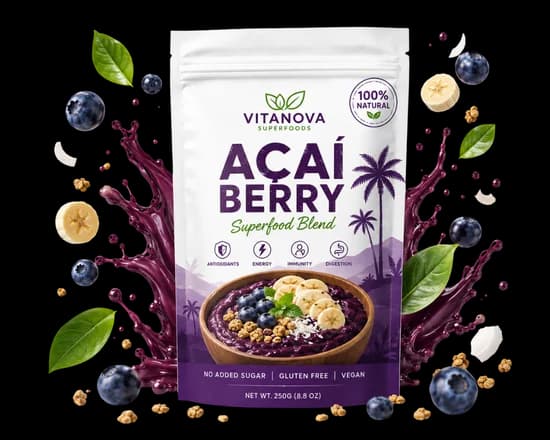
The United States is the world's largest consumer market. American brands demand packaging that communicates quality, meets FDA regulations, and stands out in competitive retail environments from New York to California.
Key Industries Driving Packaging Demand in United States
Natural and organic food & beverage brands (Chobani, headquartered in Norwich, New York, with its flagship plant in Twin Falls, Idaho) sit alongside dietary supplements (Ritual in Los Angeles, Olly in San Francisco), color cosmetics (e.l.f. Beauty, based in Oakland, California), DTC eyewear and lifestyle brands (Warby Parker, New York City), and CBD/cannabis packaging concentrated in adult-use states like California, where all cannabis goods must ship in child-resistant, opaque exit packaging. Grocery and retail brands cluster around Whole Foods Market's Austin, Texas headquarters and Keurig Dr Pepper's Frisco, Texas base, while Chicago and its suburbs (Kraft Heinz in Northfield, Mondelez International, Conagra Brands, plus large offices for Kellogg and PepsiCo) form the country's single biggest concentration of packaged-food manufacturers. New York and Los Angeles drive fashion-adjacent beauty and supplement packaging; Chicago and Austin drive food & beverage; and e-commerce brands nationwide are pushing unboxing-first, mailer-optimized design.
Packaging Regulations in United States
FDA rules remain the foundation: 21 CFR Part 101 governs food labeling (Nutrition Facts, ingredient declarations, and claims), Part 111 sets the manufacturing practice dietary supplements must follow when they're manufactured, packaged, labeled, and held, and Parts 700-701 cover cosmetic labeling, including ingredient panels and required warnings. The 2022 Modernization of Cosmetics Regulation Act (MoCRA) added new obligations for beauty clients: facilities had to register with the FDA and list products by December 29, 2023 (renewing every two years), and since December 29, 2024 every cosmetic label must carry a US domestic address, phone number, or URL for the 'Responsible Person'; a further MoCRA rule on fragrance-allergen disclosure is still pending, with a proposed rule expected in 2026. Food packaging has to track the FASTER Act, which made sesame the ninth federally recognized major allergen from January 1, 2023, and the USDA National Organic Program, which reserves the USDA seal for products at least 95% organic and requires a 'certified organic by ___' statement. Alcohol brands need a TTB Certificate of Label Approval before wine at 7%+ ABV, spirits, or malt beverages cross state lines. State rules layer on top: California's Proposition 65 requires a yellow-triangle warning in minimum 6-point type on products with listed chemicals, its 2022 SB 54 law phases in packaging producer-responsibility fees and a 25%-by-2032 plastic-reduction target, and state cannabis rules require child-resistant, opaque packaging. New York has its own packaging EPR bill moving through the legislature, and FTC Green Guides govern how 'recyclable' or 'compostable' claims can be worded on-pack.
What Print-Ready Files Look Like for United States Distribution
All Awais Khadim deliverables for United States clients include:
- Dielines and cut files: Every structural format, labels, cartons, pouches, mailer boxes, includes the dieline or cut path alongside the artwork file.
- CMYK-configured artwork: Set up for offset, flexographic, or digital print as appropriate to the project and print supplier.
- Pantone specifications: Brand colours specified in both the Pantone C/U variant (for ink specification) and CMYK (for digital proofing and suppliers without Pantone capability).
- Print-ready PDF: PDF/X-1a or PDF/X-4, with all fonts embedded and bleed and crop marks correctly set.
- $ pricing: All projects quoted in USD, with clear scope and revision round specifications included.
- Language-compliant source files: Text layers are editable in the source files and configured for United States's mandatory label language requirements, copy updates, new regulatory statements, or bilingual text additions can be made without rebuilding the design.
View packaging portfolio → | Start a project →
Working with Awais Khadim for United States Brands
We've delivered work for US-based clients including 4MOMMY DELUXE (electric breast pump product documentation, designed for US and EU distribution), VitaEChek (blood pressure monitor and blood glucose device packaging for US consumer retail), and BenjiLock (TSA fingerprint padlock packaging for US retail). Our US client work spans consumer electronics, health and wellness, and baby and maternity product categories.
Awais Khadim has delivered packaging, label design, and brand identity for brands across the United States market and the wider region. What this means practically:
- Regulation-aware files: Label requirements, mandatory declarations, and compliance-specific typography are built into the source file at brief stage, not retrofitted at the end.
- Print-ready output: All deliverables include dielines, CMYK-configured artwork, Pantone colour specifications, and PDF/X-1a or PDF/X-4 print-ready exports.
- $ pricing and transparent quotes: All projects are quoted in USD with clear scope, revision rounds, and file format specifications included.
- Service categories: Product packaging (food, supplements, cosmetics, e-commerce), label and sticker design, box and pouch packaging, brand identity systems.
View packaging portfolio → | Start a project →
Frequently Asked Questions
Does my US cosmetics label need a Responsible Person address?
Yes, since December 29, 2024, every US cosmetic label must carry a US domestic address, phone number, or URL for the Responsible Person under MoCRA (Modernization of Cosmetics Regulation Act). This is a physical label change, not just a registration step. Products sold in the US without this information are considered misbranded under the Act.
Do I need separate labels for California and the rest of the US?
Not necessarily. Many brands run a unified US label that includes the Proposition 65 warning, adding the warning does not affect sales in non-California markets, and eliminates the cost of managing two label SKUs. The key is identifying which Prop 65-listed chemicals appear in your product or packaging materials early in the design process.
How does TTB label approval work for alcohol brands?
Wines at 7%+ ABV, spirits, and malt beverages all require a Certificate of Label Approval (COLA) from the US Alcohol and Tobacco Tax and Trade Bureau before crossing state lines. Submit the final label design via the TTB COLA Online system. Review takes 30–90 days. Changes to an approved label require reapplication, so label design must be finalised before submission.
Content accurate as of July 2026. Regulatory requirements change, always verify current requirements with a qualified local compliance advisor before finalizing production files.

 Chat on WhatsApp