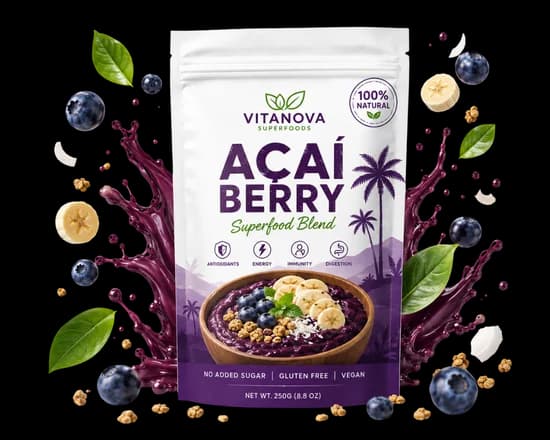
Packaging Design Services for Product Brands
Packaging is the only piece of marketing every single customer sees before they decide to buy. Our packaging design services cover both sides of the job: the structural dieline that determines how your box or pouch actually folds and holds, and the graphic design that makes it worth picking up off the shelf or opening on camera. Every project ends with print-ready files your supplier can run without back-and-forth.
What Professional Packaging Design Actually Involves
A lot of people think packaging design means resizing a logo onto a box template. It doesn't. Real packaging design starts with the dieline, the flat, unfolded blueprint that tells a printer exactly where every fold, glue flap, and cut line goes, and only after that structure is locked do we move to typography, imagery, and colour. Skip the structural step and you end up with a beautiful design that doesn't actually fold correctly or fit the product inside it. We build both in the same project so the final files are supplier-ready the first time, not after three rounds of "this doesn't fit" emails.
Structural Design vs. Graphic Design, Why Both Matter
Structural design covers the dieline, fold tolerances, glue flap placement, and how the packaging behaves once it's filled and sealed. Graphic design covers everything printed on that structure, hierarchy, colour, photography, and the copy that has to fit legally required text without crowding your brand name off the front panel. Get the structure wrong and a die-cutting press either jams or produces boxes that won't close flush. Get the graphic layer wrong and your barcode fails to scan at checkout because it's been stretched, rotated, or printed too small, a genuinely common problem we see on packaging designed without print production experience.
File Specifications We Deliver, And Why Printers Actually Need Them
Every project ships as print-ready PDF (typically PDF/X-1a or PDF/X-4 depending on your printer's press), plus editable native AI or EPS files with all fonts converted to outlines so nothing shifts when opened on a different machine. We work in CMYK by default and switch to Pantone spot colours when exact brand-colour matching across different substrates matters more than four-colour process can guarantee, a foil pouch and a matte box print colour differently even from identical CMYK values, so spot colour is often the safer call for a consistent brand look. Standard bleed is 3mm (0.125in) past the trim edge with a matching safe zone pulled in from it, and all artwork is built at true print resolution, not scaled up from a web-size logo.
Industry-Specific Requirements We Navigate
Food packaging has to accommodate a compliant nutrition/ingredients panel without the legal text swallowing your front-panel branding. Cosmetics need an ingredient list ordered by concentration along with the right INCI naming. CBD packaging carries its own set of state and country-specific restrictions, no unsubstantiated health claims, and increasingly a QR code linking to a Certificate of Analysis is expected by retailers even where it isn't strictly mandated. Supplements follow a Supplement Facts panel format that differs from a food Nutrition Facts panel, plus required structure/function claim disclaimers. We design across USA, UK, Pakistan, Switzerland, and Netherlands markets regularly, so these aren't edge cases for us, they're the default.
Common Packaging Design Mistakes That Cost Brands Real Money
The most expensive mistake is skipping a physical proof before a full production run, a colour that looks right on a calibrated monitor can shift noticeably once it hits a specific paper stock or foil finish. Second most common: submitting artwork in RGB to a CMYK press, which prints duller and occasionally shifts hue entirely. Third: ignoring die-cut tolerance, which causes folds to land a few millimetres off and panels to misalign. We've also seen brands launch five SKU sizes off one master file without building a scalable template, so every new size variant becomes a from-scratch redesign instead of a five-minute resize. All of this is avoidable with a structural-first process, which is exactly why we don't start with graphics.
Our Process, From Discovery Brief to Print-Ready Files
We start with a discovery brief covering your product dimensions, target market, competitors on the same shelf, and any regulatory text that has to be included. From there we build mood boards and a structural dieline concept before a single graphic element goes on the page. Design and up to three revision rounds follow, then we deliver final print-ready files, PDF, AI, and EPS, with fonts outlined and Pantone/CMYK values specified, ready to send straight to your printer or manufacturer.
What Affects Packaging Design Pricing
Cost mainly comes down to structural complexity (a standard folding carton is simpler than a custom die-cut display box), how many SKU variants and panel sizes need to scale from one master design, whether you need a photorealistic 3D mockup before committing to print, and turnaround speed. We offer both a monthly design subscription with unlimited requests and revisions for brands with ongoing packaging needs, and one-off fixed-price projects for a single SKU launch, worth mentioning during your first consultation so we can point you at the option that actually fits how often you'll need new packaging.
How to Prepare Before You Hire a Packaging Designer
Have your product dimensions or a rough spec sheet ready, along with any legally required text for your category (nutrition panel, ingredient list, warnings) so it isn't a late surprise mid-design. Pull two or three competitor packages from the same shelf, not to copy, but so we can deliberately design against what's already crowding your category. Know whether this is going to retail shelf, e-commerce unboxing, or both, since that changes what actually needs to work hardest: shelf stand-out versus an unboxing moment people photograph. And have a rough launch date, because structural dielines sometimes need a physical proof cycle with your printer before mass production, and that takes real calendar time.
Our Product Packaging Design Process
Discovery Brief
We learn about your product, target audience, and competitors.
Research & Concept
Mood boards, structural dielines, and initial design concepts.
Design & Revisions
Up to 3 revision rounds until the design is perfect.
Print-Ready Files
Final artwork delivered in PDF, AI, EPS with embedded fonts and Pantone/CMYK specs.
Why Clients Choose Awais Khadim
7+ Years Experience
Deep domain expertise across packaging, branding, print, and digital design for global brands.
300+ Projects Delivered
Proven track record across 190+ countries with repeat clients from USA, UK, UAE, and Europe.
Print-Ready Files
Every deliverable comes press-ready: PDF/X, outlined fonts, correct CMYK/Pantone values, and correct bleed.
Fast Turnaround
First draft within 48 business hours of brief approval. Rush turnaround is 48 hours on one-off projects and 24 hours on Pro and Enterprise subscriptions.
Clear Revision Rounds
Fixed-price projects include a set number of revision rounds, typically 2–3 depending on the service. Design subscriptions include unlimited revisions.
190+ Countries Served
Global compliance knowledge: FDA, EU FIC, MHRA, TGA, SFDA, and more, built into every project.
Frequently Asked Questions
You receive print-ready PDF, editable AI/EPS, and PNG preview files with all fonts outlined and bleed/crop marks included.
Yes. We create structural dielines from scratch or work from supplier templates, ensuring perfect fitment before any graphic design begins.
A dieline is the flat, unfolded technical blueprint your printer uses to cut and fold the packaging. A mockup is a photorealistic 3D render showing what the finished, folded packaging will look like, we can provide both.
CMYK works well for full-colour photography and complex imagery. Pantone spot colours are the safer choice when an exact, consistent brand colour matters across different substrates and finishes, we'll recommend which fits your specific packaging during the brief.
Every project includes 3 revision rounds. Additional revision rounds on fixed-price projects are billed separately at a pre-agreed rate. Design subscriptions include unlimited revisions.
Yes, we design to your printer's exact specifications (bleed, colour mode, dieline template) so the files drop straight into their workflow with no back-and-forth.
Yes. We provide photorealistic mockups so you can see exactly how the folded, filled packaging will look before committing to a production run.
A single-SKU project typically moves through concept to print-ready files within the revision rounds included in your plan; exact timelines depend on structural complexity and how many variants need to scale from the master design.
Yes. Packaging refreshes are common, we can work from your existing dieline and brand assets rather than rebuilding the structure from zero, which usually costs less and moves faster than an entirely new design.
Food & beverage, cosmetics, CBD, supplements, electronics, luxury goods, and more, each with its own labelling and compliance considerations we account for during design.
Product Packaging Design guides
- How Much Does Packaging Design Cost? A Complete Price Breakdown
- How to Brief a Packaging Designer: The Template That Gets Exactly What You Want
- What Is a Packaging Dieline? The Complete Guide for Product Brands
- How to Choose a Packaging Designer: 12 Questions to Ask Before You Hire
- Print-Ready Packaging Files: CMYK, Bleed, Resolution, and What Your Printer Actually Needs
- The Packaging Design Process: What Happens Between Brief and Final Files
- Packaging Design for Startups: What to Prioritise, What to Defer, and How to Launch Without Overspending
- Luxury Packaging Design: What Makes Premium Packaging Actually Work
- Colour Psychology in Packaging Design: What Colours Actually Communicate (With Category Evidence)
- Packaging Redesign: When to Update Your Packaging and How to Do It Without Losing Brand Equity
Popular regions for Product Packaging Design
See all countries we serve.
Ready to Start Your Product Packaging Design Project?
Free consultation. Reply within 4 business hours · Fixed quote within 24 hours.
 Chat on WhatsApp




* First draft within 48 business hours · Reply within 4 business hours · Fixed quote within 24 hours