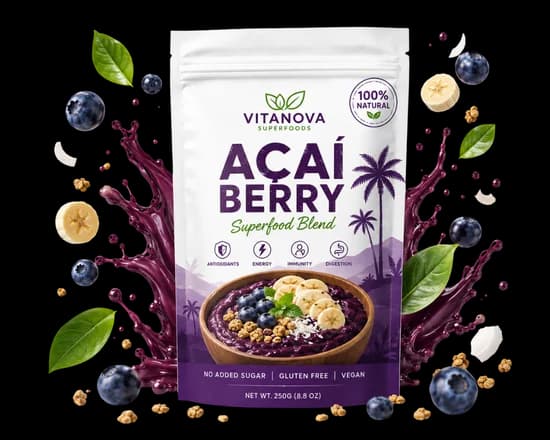
France's globally dominant luxury, wine, and gastronomy industries make Paris, Lyon, and Bordeaux-based brands answer to one of Europe's most tightly regulated packaging environments. The French packaging sector itself is large but hard to pin down precisely, the Conseil National de l'Emballage (CNE) puts industry turnover at €30–35 billion, while INSEE's narrower measure of dedicated packaging manufacturers puts revenue at €18.3 billion, and it now operates under a fast-moving compliance calendar: the Triman recycling logo and info-tri sorting instructions have been mandatory on virtually all packaging sold in France since 1 January 2022 under the AGEC anti-waste law, and front-of-pack Nutri-Score labelling, voluntary since 2017 but voted mandatory for most prepacked foods by the National Assembly on 7 November 2025, with a two-year compliance window, is becoming a baseline shelf requirement rather than a retailer preference. A new Extended Producer Responsibility scheme for professional and food-service packaging (décret n° 2025-1081) takes effect 1 January 2026, adding a second EPR track alongside the household-packaging system run by Citeo.
Key Industries Driving Packaging Demand in France
Luxury goods (LVMH, Kering, L'Oréal), wine and spirits (Champagne, Bordeaux, Cognac), aerospace (Airbus, Toulouse), pharmaceutical (Sanofi), and premium food and retail (Carrefour, E.Leclerc).
Packaging Regulations in France
EU FIC Regulation 1169/2011 applies; all labels must be in French. DGCCRF (Direction générale de la concurrence, de la consommation et de la répression des fraudes) enforces consumer and labelling law. Household packaging producer responsibility runs through Citeo, formed in 2017 from the merger of Éco-Emballages and Ecofolio, channelling roughly €1.6 billion a year in eco-contributions into collection, sorting, and eco-design support; the AGEC law requires the Triman logo plus info-tri sorting instructions on nearly all packaging, with size-tiered placement rules (packaging over 20cm² must carry the full logo and sorting directions on-pack, not just in an app or brochure). A parallel professional/food-service packaging EPR track, created by décret n° 2025-1081 of 17 November 2025, goes live 1 January 2026 with eco-contributions due from 1 July 2026. Nutri-Score, revised by decree on 14 March 2025 to tighten its salt, sugar, and fibre thresholds, was voted mandatory for most prepacked foods on 7 November 2025 (two-year transition; AOP, IGP, Label Rouge, and organic-certified products are exempt). Wine and cheese carry AOP/AOC designations administered by INAO (Institut National de l'Origine et de la Qualité). The 1991 Evin Law restricts alcohol advertising content and channels, loosened in 2015 to permit factual 'information content', landscape, heritage, production method, for AOC/IGP-designated wines and spirits.
What Print-Ready Files Look Like for France Distribution
All Awais Khadim deliverables for France clients include:
- Dielines and cut files: Every structural format, labels, cartons, pouches, mailer boxes, includes the dieline or cut path alongside the artwork file.
- CMYK-configured artwork: Set up for offset, flexographic, or digital print as appropriate to the project and print supplier.
- Pantone specifications: Brand colours specified in both the Pantone C/U variant (for ink specification) and CMYK (for digital proofing and suppliers without Pantone capability).
- Print-ready PDF: PDF/X-1a or PDF/X-4, with all fonts embedded and bleed and crop marks correctly set.
- € pricing: All projects quoted in EUR, with clear scope and revision round specifications included.
- Language-compliant source files: Text layers are editable in the source files and configured for France's mandatory label language requirements, copy updates, new regulatory statements, or bilingual text additions can be made without rebuilding the design.
View packaging portfolio → | Start a project →
Working with Awais Khadim for France Brands
Awais Khadim has delivered packaging, label design, and brand identity for brands across the France market and the wider region. What this means practically:
- Regulation-aware files: Label requirements, mandatory declarations, and compliance-specific typography are built into the source file at brief stage, not retrofitted at the end.
- Print-ready output: All deliverables include dielines, CMYK-configured artwork, Pantone colour specifications, and PDF/X-1a or PDF/X-4 print-ready exports.
- € pricing and transparent quotes: All projects are quoted in EUR with clear scope, revision rounds, and file format specifications included.
- Service categories: Product packaging (food, supplements, cosmetics, e-commerce), label and sticker design, box and pouch packaging, brand identity systems.
View packaging portfolio → | Start a project →
Frequently Asked Questions
Does French packaging legally need to be in French?
Yes. France's Loi Toubon (Law No. 94-665 of 4 August 1994) requires that all mandatory consumer information, ingredient lists, usage instructions, safety warnings, and required claims, appear in French. This is in addition to EU FIC requirements. English-only labels are not legally compliant for the French market. Translations into additional languages are permitted alongside French but cannot replace it.
Is the Nutri-Score mandatory in France?
No, as of mid-2026, the Nutri-Score (the A–E colour-coded front-of-pack nutrition rating) remains voluntary in France. It is strongly encouraged by the French government and adopted by major retailers, but it is not legally mandated. Products without a Nutri-Score may receive less prominent shelf placement from supermarkets that use it as a listing factor.
What does the AGEC law require for French market packaging?
The French AGEC law (Loi Anti-Gaspillage pour une Économie Circulaire, 2020) introduces phased packaging obligations including: mandatory on-pack recycling information using the Triman logo and the Info-tri pictogram with material-specific sorting instructions (managed via citeo), a ban on single-use plastics for certain categories, and extended producer responsibility (EPR) fees for packaging waste. From 2025, additional product categories require environmental impact information on pack.
Content accurate as of July 2026. Regulatory requirements change, always verify current requirements with a qualified local compliance advisor before finalizing production files.



 Chat on WhatsApp