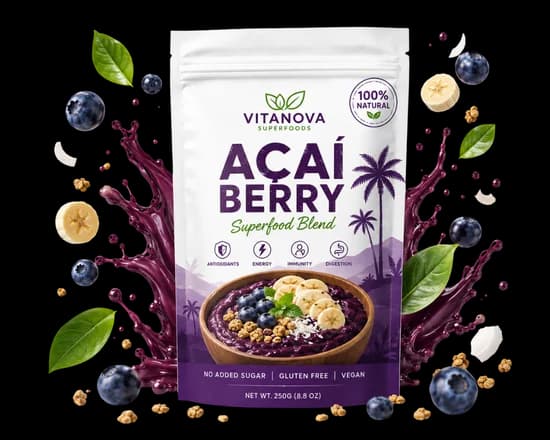
Indonesia's 280-million-person archipelago, the world's fourth most populous country and Southeast Asia's largest economy, combines a packaging materials market on track for roughly USD 40 billion by 2032 with a digital economy that reached an estimated USD 100 billion in GMV in 2025 (14% year-on-year growth per the e-Conomy SEA 2025 report from Google, Temasek and Bain, with e-commerce alone contributing roughly USD 71 billion), pushing brands distributing through Jakarta and Surabaya's modern-trade and marketplace networks toward small-format, tamper-evident, stackable packaging. Halal compliance is the market's defining near-term deadline: since 1 March 2022 the only legally valid halal mark has been BPJPH's purple gunungan-wayang logo (replacing the old green MUI mark, usable on existing stock only until 17 October 2026), and mandatory halal certification for all food, beverage, cosmetic, and pharmaceutical products entering the Indonesian market becomes a hard, non-extendable requirement on 17 October 2026.
Key Industries Driving Packaging Demand in Indonesia
Palm oil (world's largest producer), coal and nickel mining, natural gas, pharmaceutical (Kimia Farma, Kalbe Farma), FMCG (Unilever Indonesia, Indofood), and e-commerce/digital economy (roughly USD 100 billion GMV in 2025).
Packaging Regulations in Indonesia
BPOM (Badan Pengawas Obat dan Makanan) registration is mandatory for all food, cosmetics, and pharmaceutical products; labels must be in Bahasa Indonesia, per BPOM Regulation No. 31/2018 as amended by No. 20/2021, using Arial type at a minimum 1mm (6pt) size. BPOM Regulation No. 26/2021 governs mandatory nutrition-information panels on processed food labels. Halal certification is administered by BPJPH (Badan Penyelenggara Jaminan Produk Halal), the sole certifying body since 2019, with MUI's role now limited to issuing the underlying religious fatwa; only BPJPH's official purple gunungan-wayang logo (introduced 1 March 2022) may appear on new packaging, and mandatory certification for all applicable products, with no further extension, takes effect 17 October 2026. SNI 8218:2024 is now a mandatory national standard (SPPT-SNI certification and mark required) for paper and cardboard used as primary food-contact packaging, applying to both domestic producers and importers. Government Regulation 69/1999 on food labelling and advertising remains formally in force but is under active revision by BPOM, with a replacement targeted for 2026.
What Print-Ready Files Look Like for Indonesia Distribution
All Awais Khadim deliverables for Indonesia clients include:
- Dielines and cut files: Every structural format, labels, cartons, pouches, mailer boxes, includes the dieline or cut path alongside the artwork file.
- CMYK-configured artwork: Set up for offset, flexographic, or digital print as appropriate to the project and print supplier.
- Pantone specifications: Brand colours specified in both the Pantone C/U variant (for ink specification) and CMYK (for digital proofing and suppliers without Pantone capability).
- Print-ready PDF: PDF/X-1a or PDF/X-4, with all fonts embedded and bleed and crop marks correctly set.
- Rp pricing: All projects quoted in IDR, with clear scope and revision round specifications included.
- Language-compliant source files: Text layers are editable in the source files and configured for Indonesia's mandatory label language requirements, copy updates, new regulatory statements, or bilingual text additions can be made without rebuilding the design.
View packaging portfolio → | Start a project →
Working with Awais Khadim for Indonesia Brands
Awais Khadim has delivered packaging, label design, and brand identity for brands across the Indonesia market and the wider region. What this means practically:
- Regulation-aware files: Label requirements, mandatory declarations, and compliance-specific typography are built into the source file at brief stage, not retrofitted at the end.
- Print-ready output: All deliverables include dielines, CMYK-configured artwork, Pantone colour specifications, and PDF/X-1a or PDF/X-4 print-ready exports.
- Rp pricing and transparent quotes: All projects are quoted in IDR with clear scope, revision rounds, and file format specifications included.
- Service categories: Product packaging (food, supplements, cosmetics, e-commerce), label and sticker design, box and pouch packaging, brand identity systems.
View packaging portfolio → | Start a project →
Frequently Asked Questions
What labeling or regulatory requirements should I know about for the Indonesia market?
BPOM (Badan Pengawas Obat dan Makanan) registration is mandatory for all food, cosmetics, and pharmaceutical products; labels must be in Bahasa Indonesia, per BPOM Regulation No. 31/2018 as amended by No. For your specific product category, always verify current requirements with a local compliance specialist before finalising label copy or production files.
Does working with an international designer affect regulatory compliance for Indonesia?
No, label compliance is about the content of the deliverable files, not the designer's location. Awais Khadim produces print-ready source files with editable text layers, correctly structured for your product category's mandatory declarations. You (or your local importer or distributor) supply the specific regulatory text, which is integrated into the design and production files before print.
How are projects priced for Indonesia clients?
Projects for Indonesia clients are quoted in IDR. Awais Khadim provides upfront transparent quotes covering design scope, revision rounds, and all file format deliverables. International payment is accepted via Wise, Payoneer, PayPal, and standard bank transfer. All deliverables, source files, print-ready PDFs, dielines, are supplied digitally, so there are no shipping costs or delivery delays.
Content accurate as of July 2026. Regulatory requirements change, always verify current requirements with a qualified local compliance advisor before finalizing production files.



 Chat on WhatsApp