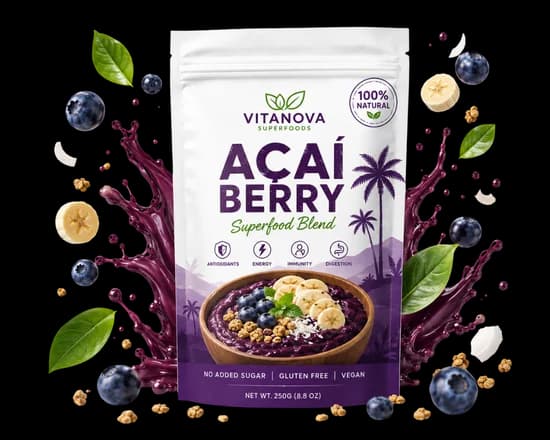
Saudi Arabia's Riyadh and Jeddah markets anchor the Gulf's largest consumer economy, where the domestic packaging industry was valued at roughly USD 11.7 billion in 2025 and is projected to reach USD 16.6 billion by 2034, driven by FMCG demand, e-commerce growth, and a government-led sustainable-packaging push under Vision 2030. All food, pharmaceutical, and cosmetic products require bilingual Arabic-English packaging with SFDA registration numbers, mandatory Halal certification, and GSO conformity marks, while the National Food Security Strategy, backed by a USD 10 billion government investment, targets raising domestic food self-sufficiency from roughly 20% to 40% by 2030 for priority categories, fuelling a wave of Saudi-origin food brands (led by dairy giant Almarai and NADEC) that need premium, export-ready design.
Key Industries Driving Packaging Demand in Saudi Arabia
Oil and gas (Saudi Aramco), petrochemicals (SABIC), pharmaceutical distribution, dairy and FMCG (Almarai, NADEC), and Vision 2030 giga-project tourism and entertainment (NEOM, Red Sea Global, Qiddiya).
Packaging Regulations in Saudi Arabia
SFDA (Saudi Food and Drug Authority) registration is mandatory for all food, pharmaceutical, and cosmetic products; the SFDA registration number must appear on packaging, and food label content must comply with GSO 9:2022 (SFDA.FD GSO 9:2022), which sets requirements for product name, packer details, country of origin, descending-order ingredient lists, and shelf life. Arabic is legally required on all labels, with English permitted alongside it. Halal certification is issued by the SFDA's Saudi Halal Center or an SAC-accredited body under the GCC-wide GSO 2055-2 halal standard. Non-food consumer products must be registered on the SASO-run SABER platform, obtaining a Product Certificate of Conformity (PCoC) plus a Shipment Certificate of Conformity (SCoC) per import batch. From late 2024 and mid-2025, new SFDA menu-labelling rules additionally require restaurants and food-delivery platforms to display salt-content icons, caffeine content, and calorie-burn-time estimates. Alcohol-based fragrances may not be marketed for consumption or bodily application.
What Print-Ready Files Look Like for Saudi Arabia Distribution
All Awais Khadim deliverables for Saudi Arabia clients include:
- Dielines and cut files: Every structural format, labels, cartons, pouches, mailer boxes, includes the dieline or cut path alongside the artwork file.
- CMYK-configured artwork: Set up for offset, flexographic, or digital print as appropriate to the project and print supplier.
- Pantone specifications: Brand colours specified in both the Pantone C/U variant (for ink specification) and CMYK (for digital proofing and suppliers without Pantone capability).
- Print-ready PDF: PDF/X-1a or PDF/X-4, with all fonts embedded and bleed and crop marks correctly set.
- ر.س pricing: All projects quoted in SAR, with clear scope and revision round specifications included.
- Language-compliant source files: Text layers are editable in the source files and configured for Saudi Arabia's mandatory label language requirements, copy updates, new regulatory statements, or bilingual text additions can be made without rebuilding the design.
View packaging portfolio → | Start a project →
Working with Awais Khadim for Saudi Arabia Brands
Awais Khadim has delivered packaging, label design, and brand identity for brands across the Saudi Arabia market and the wider region. What this means practically:
- Regulation-aware files: Label requirements, mandatory declarations, and compliance-specific typography are built into the source file at brief stage, not retrofitted at the end.
- Print-ready output: All deliverables include dielines, CMYK-configured artwork, Pantone colour specifications, and PDF/X-1a or PDF/X-4 print-ready exports.
- ر.س pricing and transparent quotes: All projects are quoted in SAR with clear scope, revision rounds, and file format specifications included.
- Service categories: Product packaging (food, supplements, cosmetics, e-commerce), label and sticker design, box and pouch packaging, brand identity systems.
View packaging portfolio → | Start a project →
Frequently Asked Questions
Is Arabic labeling mandatory for Saudi food packaging?
Yes. The Saudi Food and Drug Authority (SFDA) requires Arabic as the primary language on all food product labels. English is commonly included alongside Arabic, but the Arabic version must be present and must be at least as prominent as any other language on the label. The SFDA's Technical Regulation for Labeling of Prepackaged Foods (GSO 9) specifies the required content and format.
What is the SFDA product registration process?
The Saudi Food and Drug Authority (SFDA) regulates food, drugs, cosmetics, and medical devices sold in Saudi Arabia. Food products must be registered via the SFDA's online portal (Ghad system) before market entry. The process includes technical documentation submission, label review, and for certain categories, product testing. Timelines vary, food registration typically takes 2–6 weeks; cosmetics and health supplements take 4–12 weeks. The Responsible Person must be a Saudi-registered entity.
Are halal certification requirements mandatory for Saudi Arabia?
Halal certification is legally required for all imported meat and poultry products in Saudi Arabia, and is practically required for most other food categories to secure retailer listings. The Saudi Standards, Metrology and Quality Organization (SASO) and SFDA oversee halal compliance. A valid halal certificate from a SASO-recognized international certifier must accompany the product at import and the halal mark must be visible on the label.
Content accurate as of July 2026. Regulatory requirements change, always verify current requirements with a qualified local compliance advisor before finalizing production files.


 Chat on WhatsApp