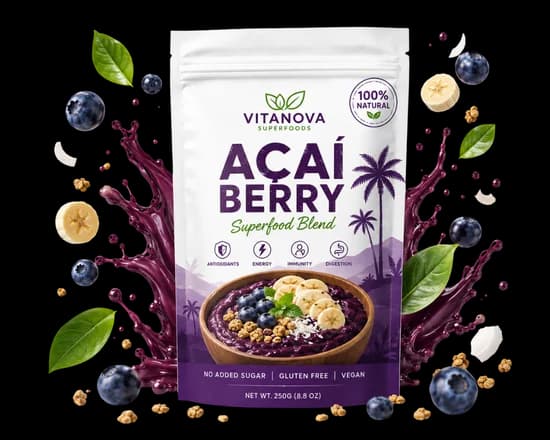
The UAE's five design-relevant markets are led by Dubai and Abu Dhabi, the Gulf's premier luxury-retail and re-export hubs, with Sharjah adding a distinct dimension as a UNESCO World Book Capital (2019) and the region's publishing hub, home to the Sharjah International Book Fair, which draws more than 1,500 publishers annually, making it a natural centre for print-led packaging and editorial design work alongside Dubai's FMCG and luxury accounts. Dubai Design District (d3) alone now hosts more than 385 design, fashion and art companies, cementing Dubai's position as the region's largest concentrated design cluster. The re-export economy shaping so much of UAE packaging demand runs through Jebel Ali Free Zone (Jafza), which logged a record $190 billion in trade in its 40th-anniversary year (2025), up 15% year-on-year, meaning packaging designed in the UAE frequently has to satisfy local Emirati retail shelf standards and re-export requirements across the wider GCC and Middle East/Africa corridor simultaneously.
Key Industries Driving Packaging Demand in UAE
Oil and gas (ADNOC), logistics and re-export (DP World, Jebel Ali Free Zone/Jafza), branded food and beverage manufacturing (Agthia Group, Al Ain, Grand Mills), retail and luxury distribution (Majid Al Futtaim, Carrefour Middle East; Chalhoub Group), real estate and hospitality (Emaar), financial services, and pharmaceutical distribution.
Packaging Regulations in UAE
Standardization and conformity, including the design-relevant Halal National Mark, now sit with the Ministry of Industry and Advanced Technology (MoIAT), which absorbed the former Emirates Authority for Standardization and Metrology (ESMA) when MoIAT was created in July 2020; ESMA no longer operates as an independent certifying body, and its conformity functions run through MoIAT's Conformity Services and Standards & Legislation sectors. Halal certification is governed by Cabinet Decision No. 10 of 2014 (UAE System for Control of Halal Products) and the UAE.S 2055 family of standards: UAE.S 2055-1 for general Halal food requirements, UAE.S 2055-4 for Halal cosmetics and personal care, and UAE.S 993 for Islamic slaughtering requirements. Regional conformity references the GCC Standardization Organization (GSO). MOCCAE (Ministry of Climate Change and Environment) manages food-product import permits and registration through its ZAD electronic platform, while Dubai Municipality's Food Safety Department and Abu Dhabi's Department of Health (DOH) apply emirate-level enforcement. Arabic is legally mandatory on all consumer labels alongside English. Pharmaceutical packaging regulation has recently shifted: historically handled by MOHAP (Ministry of Health and Prevention), federal drug regulation now runs through the Emirates Drug Establishment (EDE), created under Federal Decree-Law No. 38 of 2024 (effective 2 January 2025), MOHAP's pharmaceutical product registration service itself transferred to EDE from 29 December 2025, so packaging artwork approvals for drug products should now route through EDE rather than MOHAP. Dubai Health Authority (DHA) and Abu Dhabi DOH continue to run emirate-level product registration alongside the federal system.
What Print-Ready Files Look Like for UAE Distribution
All Awais Khadim deliverables for UAE clients include:
- Dielines and cut files: Every structural format, labels, cartons, pouches, mailer boxes, includes the dieline or cut path alongside the artwork file.
- CMYK-configured artwork: Set up for offset, flexographic, or digital print as appropriate to the project and print supplier.
- Pantone specifications: Brand colours specified in both the Pantone C/U variant (for ink specification) and CMYK (for digital proofing and suppliers without Pantone capability).
- Print-ready PDF: PDF/X-1a or PDF/X-4, with all fonts embedded and bleed and crop marks correctly set.
- د.إ pricing: All projects quoted in AED, with clear scope and revision round specifications included.
- Language-compliant source files: Text layers are editable in the source files and configured for UAE's mandatory label language requirements, copy updates, new regulatory statements, or bilingual text additions can be made without rebuilding the design.
View packaging portfolio → | Start a project →
Working with Awais Khadim for UAE Brands
Awais Khadim has delivered packaging, label design, and brand identity for brands across the UAE market and the wider region. What this means practically:
- Regulation-aware files: Label requirements, mandatory declarations, and compliance-specific typography are built into the source file at brief stage, not retrofitted at the end.
- Print-ready output: All deliverables include dielines, CMYK-configured artwork, Pantone colour specifications, and PDF/X-1a or PDF/X-4 print-ready exports.
- د.إ pricing and transparent quotes: All projects are quoted in AED with clear scope, revision rounds, and file format specifications included.
- Service categories: Product packaging (food, supplements, cosmetics, e-commerce), label and sticker design, box and pouch packaging, brand identity systems.
View packaging portfolio → | Start a project →
Frequently Asked Questions
Is Arabic mandatory on packaging sold in the UAE?
Yes. Arabic is required on all consumer product labels sold in the UAE under ESMA (Emirates Authority for Standardization and Metrology) requirements and UAE.S GSO 9:2013. Bilingual Arabic/English labeling is the commercial standard and is required by most UAE retailers. Labels printed in Arabic only are rare in practice given the UAE's large international consumer and expatriate population.
What is ESMA product registration for imported packaged goods?
The Emirates Authority for Standardization and Metrology (ESMA) requires conformity assessment and registration for a wide range of imported consumer products, including food, cosmetics, electrical goods, toys, and building materials, under the UAE Product Conformity Scheme (ECAS). Regulated categories require third-party testing and ESMA certification before import and sale. ESMA registration lead times and fees vary by product category; food products typically require 2–8 weeks for clearance.
Is halal certification required on UAE food packaging?
Halal certification is legally required for all imported meat and poultry products sold in the UAE. For other food categories, halal certification is not legally mandated but is commercially essential, most UAE retailers and supermarket chains will not list products without a valid halal certificate from a UAE-recognized certifying body (such as ESMA or Emirates International Accreditation Centre-approved certifiers). The halal logo must appear on-pack for certified products.
Content accurate as of July 2026. Regulatory requirements change, always verify current requirements with a qualified local compliance advisor before finalizing production files.



 Chat on WhatsApp